
Last updated November 21, 2026
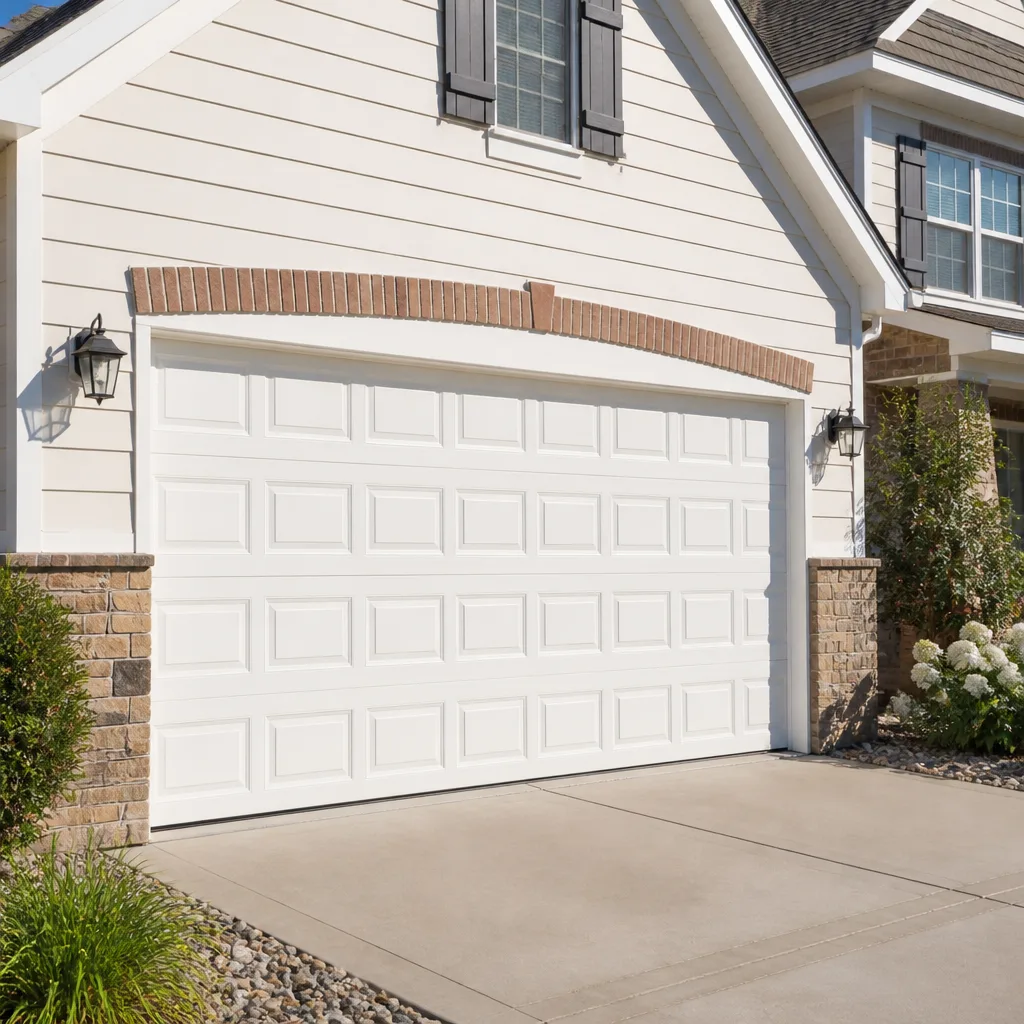 Raised-panel steel
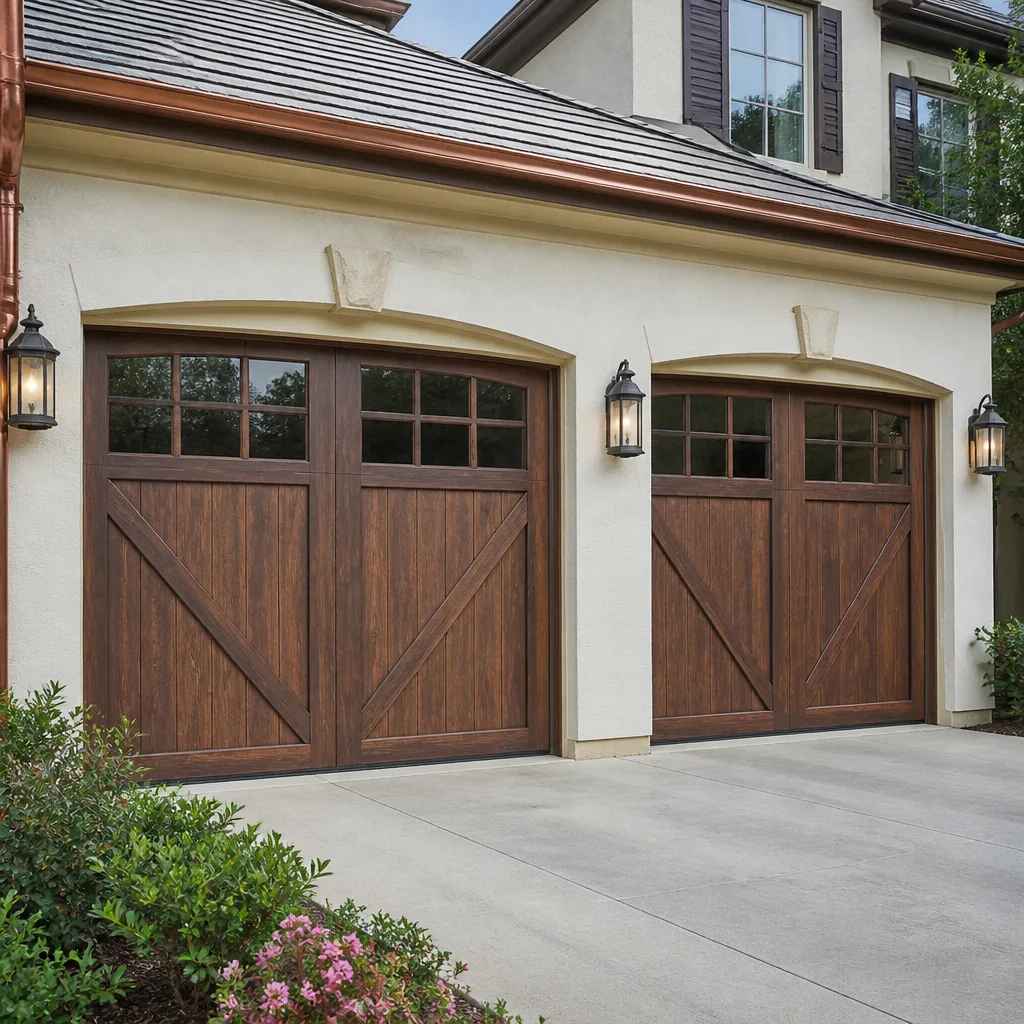 Carriage house
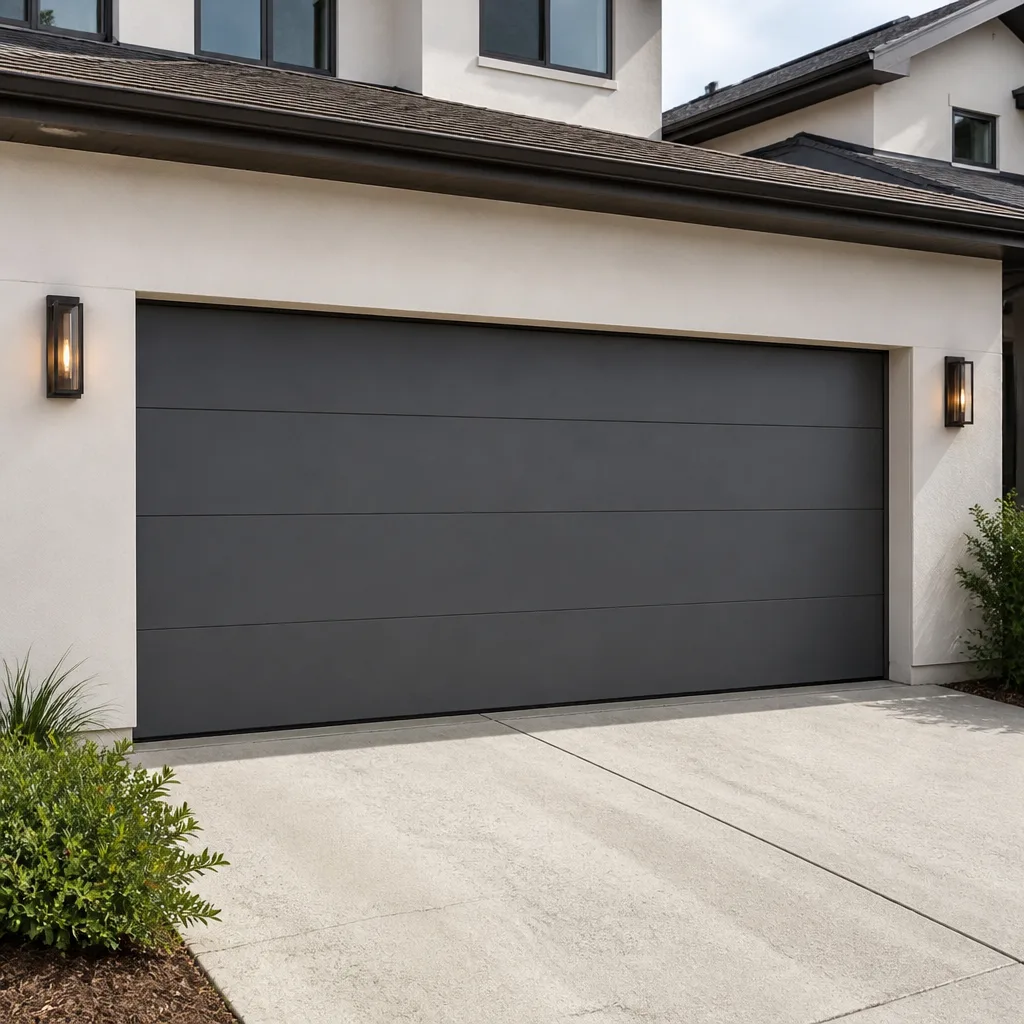 Modern flush
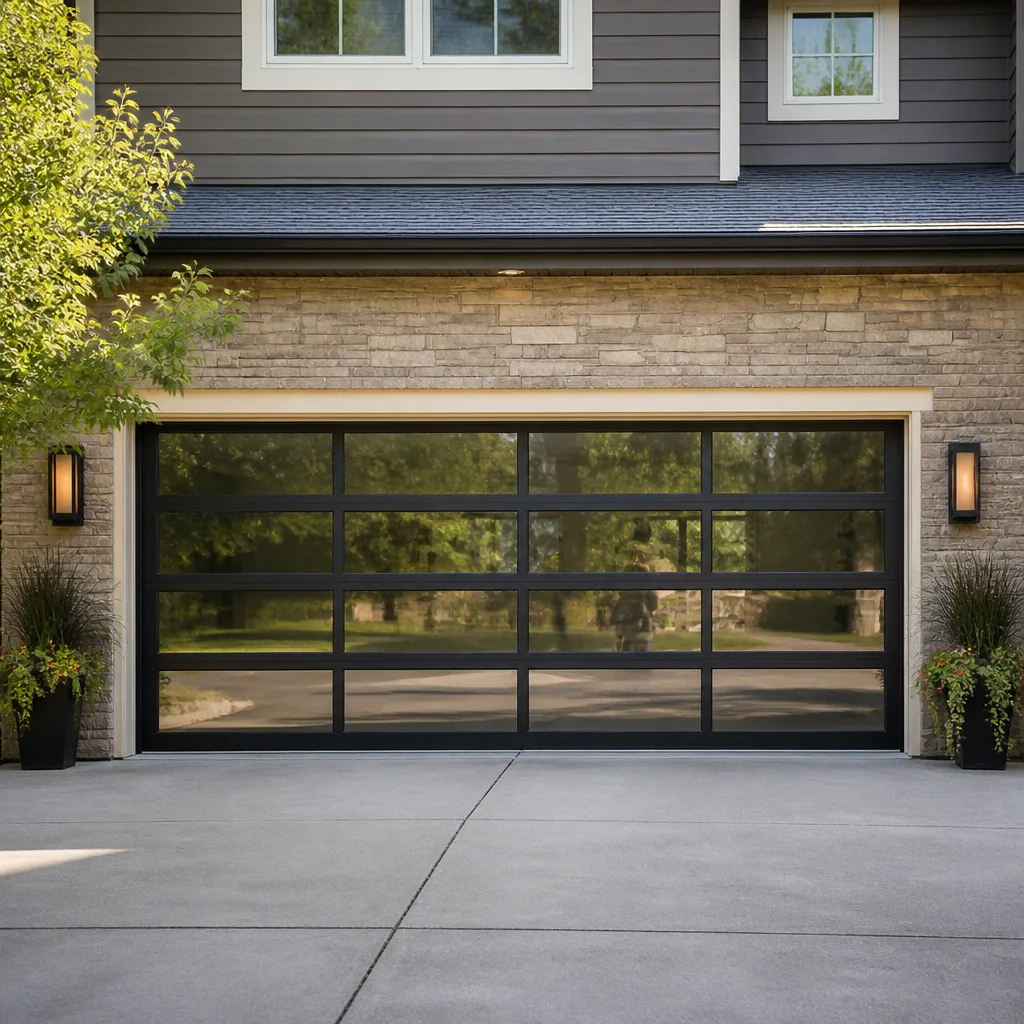 Full-view glass
 LiftMaster openers
 Chamberlain openers
Full 25-point door and opener safety check with every visit - springs, cables, rollers, tracks, and your LiftMaster or Chamberlain opener included
You get a price before we start. It does not change when the pro arrives.
Get your free estimateGarage Door Repair Maintenance Checklist for Hialeah Homeowners
The standard “lubricate your garage door every six months” advice was written for a place with four real seasons. Hialeah isn’t that place. Our humidity stays high most of the year, the sun works on seals and paint year-round, and the temperature swing between a cool January morning and an August afternoon puts your door’s metal through more expansion and contraction than most homeowners realize. That shortens the useful life of some parts and stretches it for others. A checklist built for Ohio will have you servicing the wrong components at the wrong time. What follows is a maintenance schedule calibrated to how doors actually age in Hialeah, from the rollers up through the torsion spring, with pass/fail tests you can run in minutes and a clear line for when to stop and call a specialist.
Quick Answer
A garage door in Hialeah needs a component-specific inspection roughly every four months, not twice a year, because heat and humidity accelerate wear on rollers, seals, and springs faster than in drier climates. The highest-value tasks are lubricating the right parts with the right product, testing the auto-reverse and balance functions monthly, and inspecting the torsion spring for rust banding and coil separation. Anything involving the springs, cables, or the opener’s internal gearing is a professional job.
Styles & brands we work with
- Raised-panel steel
- Carriage house
- Modern flush
- Full-view glass
- LiftMaster openers
- Chamberlain openers
Table of Contents
- Why Hialeah Doors Age Differently
- Your Month-by-Month Maintenance Calendar
- Lubrication: Which Product Goes Where
- Testing Bottom Seal Integrity Against Driving Rain
- Reading Torsion Spring Wear Before It Fails
- The 10-Minute Safety and Balance Test
- Hardware, Tracks, and Rollers
- When a Checklist Item Becomes a Repair
Why Hialeah Doors Age Differently
Walk down a residential block in Hialeah and you’ll see doors that look ten years old on one house and two years old on the next. The difference is rarely the door. It’s the microclimate of where the home sits, how much direct afternoon sun hits the panels, and whether anyone has ever lubricated the moving parts. Hialeah’s combination of sustained warmth and moisture means metal parts oxidize faster than they would in a dry climate, while the near-constant thermal cycling loosens fasteners and works hardened grease out of bearings.
Here’s what actually fails first in this environment, in rough order:
- Nylon and steel rollers develop flat spots and bearing noise sooner than in cooler climates, because the door cycles through more heat expansion in a single year.
- Bottom seals take a double hit from ultraviolet light and the repeated flexing of the door meeting a slightly uneven slab.
- Torsion springs show surface rust earlier, and rust pitting is where fatigue cracks begin.
- Hinges and fasteners loosen as the door’s steel expands and contracts with the daily temperature swing.
- Opener drive gears wear faster when the door itself is out of balance and the motor has to work harder.
This is why our team treats maintenance as a component schedule rather than a single “tune-up.” Each part has its own failure timeline, and in Hialeah those timelines run shorter than the national averages you’ll find online. For the repair side of any item on this list, our garage door repair service covers the full range from a noisy roller to a snapped spring.
Your Month-by-Month Maintenance Calendar
A calendar tied to Hialeah’s seasons makes more sense than “every six months,” because the stresses on your door change with the weather. Here’s how we’d schedule it across a full year.
January and February: Dry-Season Hardware Check
This is the coolest, driest stretch, which makes it the best time to inspect hardware. Walk the door with a socket wrench and check every hinge bolt, the track brackets, and the lag bolts that hold the opener’s rail to the ceiling. Tighten anything loose. Clean the tracks with a dry cloth and look for grit or debris that’s found its way in. Cold-weather contraction can leave fasteners looser than they were in summer.
March and April: Roller and Seal Inspection
Before the heat builds, check each roller for flat spots, cracks, or excessive play in the bearing. Run your hand along the bottom seal (door down) and look for compression set, splitting, or gaps at the corners. This is also a good window to test the opener’s force settings against the manufacturer’s guidance.
May: Pre-Hurricane Prep
Storm season is the reason this month matters in Hialeah. Confirm the door closes fully and the seal makes contact across the whole width. Test the auto-reverse. Check that the emergency release cord is intact and easy to reach. Verify the door’s vertical track brackets are secure, since a loose bracket under wind load is a real problem. If you have a wind-rated door, confirm the labeling is legible; that information matters to insurers and inspectors.
June through September: Heat and Humidity Watch
Peak heat and moisture. Every four weeks, listen to the door as it cycles. New squeaks, grinding, or a door that jerks mid-travel point to rollers, hinges, or a spring losing tension. Re-lubricate the moving parts on the schedule below.
October and November: Post-Storm Inspection
After the storm season winds down, do a full inspection: tracks for alignment, panels for dents or bending, seal for damage, and springs for any new rust banding. Storms also leave debris in tracks that needs clearing before it scores the rollers.
December: Full Annual Review
Run every test on this page end to end. This is your baseline for the coming year.
Lubrication: Which Product Goes Where
The single most common DIY mistake we see in Hialeah is spraying WD-40 on the torsion spring. WD-40 is a solvent and light water displacer, not a lubricant, and it strips the protective film from the spring’s surface. In a humid climate, a bare spring re-rusts quickly, and that rust is exactly where fatigue cracks start. The spring is also under extreme tension and should never be your DIY target anyway.
Use the right product on the right part:
- Torsion and extension springs: none. This is a professional-only component, and the correct treatment is a proper spring-rated lubricant applied by a technician.
- Rollers and hinges: a silicone-based or lithium grease spray. Avoid anything heavy that collects grit.
- Tracks: none. Tracks should be kept clean and dry. Grease on a vertical track collects dust, which turns into grinding paste.
- Hinges and bearing plates: a few drops of light machine oil or silicone spray at the pivot points.
- Opener rail (chain or belt): follow the opener manufacturer’s spec. A Clopay or Amarr door is often paired with a Craftsman or LiftMaster opener, and belt drives usually need no lubrication at all.
Frequency matters in Hialeah. Because the door cycles through wide temperature swings and the air stays humid, we recommend re-lubricating the rollers and hinges every four months rather than twice a year. If you’re using a chain-drive opener and hear a metallic whine, a technician can check whether the rail needs attention. Our garage door opener repair team handles the motor side of any job.
Never lubricate the spring, the cables, or the inside of the tracks. Those are the three places where “adding oil” does more harm than good.
Testing Bottom Seal Integrity Against Driving Rain
Most seal advice says to “check for visible cracks.” That’s not enough in a place where rain arrives sideways. A seal can look intact and still let water in under wind-driven conditions. Here’s a better test, and you don’t need tools.
The paper test: Close the door fully. Take a sheet of ordinary paper and try to slide it under the seal at several points along the width. If it slides through easily at any spot, the seal isn’t making contact there. Repeat on the inside face if you can reach it.
The light test: With the door closed, look along the bottom edge from just inside the garage. Any light showing through is a gap. In Hialeah, that gap is also where insects and warm humid air enter the garage, which can affect everything stored inside and the pressure balance of the house.
The damage check: Run a hand along the seal and feel for hardening, splits, or a section that’s flattened and no longer springy. Ultraviolet exposure degrades the rubber, and once a seal is hard it won’t conform to the concrete.
If the door still leaks, the concrete slab itself may be uneven, or the door may be slightly out of adjustment rather than the seal being worn. A technician can check the bottom bracket and track alignment at the same time. Seal replacement is one of the cheaper items on the maintenance list and one of the most worthwhile in this climate.
Reading Torsion Spring Wear Before It Fails
A torsion spring is under enough stored tension to cause serious injury if handled incorrectly, so the goal here is inspection, not repair. Your job is to spot the warning signs and call a professional. In high-humidity climates, some of those signs appear earlier than they would elsewhere.
What to look for on your spring (from a safe distance, never touching it):
- Rust banding: a ring or band of orange-brown rust along the coil. In humid air, moisture settles into the coil gaps and starts corrosion at those spots. Rust pitting reduces the spring’s effective strength and creates stress points.
- Coil separation: visible gaps opening between individual coils while the door is at rest. A spring that’s losing tension will start to show these gaps.
- Anchor plate stress marks: this is the plate that holds the spring assembly at the center. Look for cracks, bends, or movement that wasn’t there before. If the anchor plate looks stressed, stop using the door and call right away.
- Rust on the winding cone or collar: corrosion here suggests the whole assembly has been taking on moisture.
- Side-to-side door tilt: a door that’s level when down but sags to one side as it rises usually has a spring with uneven tension.
If you see rust banding or coil separation, use the door as little as possible until a technician inspects it. Our garage door spring repair service exists because this is the most mechanically dangerous failure point on any residential door. Our technicians have up to 10 years of experience with torsion and extension spring systems, and the job involves proper winding bars, tension measurement, and safe release of stored energy. Don’t attempt it yourself.
In our experience, springs in Hialeah show these signs earlier than the same springs would in a drier climate. That’s a reason to inspect monthly, not once a year.
The 10-Minute Safety and Balance Test
You can run these two tests in about ten minutes, with no tools. Do them monthly, ideally when the door is at the start of its travel and the garage is clear.
The Auto-Reverse Test
- With the door fully open, place a solid object about the height of a brick or a small box on the flat ground directly under the door’s center.
- Close the door using the wall switch or remote. Standard residential openers should reverse direction when the door contacts the object. If it doesn’t reverse, the door is unsafe to operate until adjusted.
- Next, test the photo-eye safety system. With the door closed, locate the two sensor units on either side of the opening, about six inches above the floor. Wave a hand (or a length of cardboard) across the beam between them while pressing the close button. The door should refuse to close or reverse immediately.
- Check that the photo-eye units’ lenses are clean and that each unit has a small indicator light showing alignment. A clipped or misaligned sensor is a common cause of a door that won’t close.
The Balance Test
- Close the door, then pull the emergency release cord so the door disconnects from the opener.
- Lift the door by hand to about waist height and let go. A properly balanced door should hold its position or drift slightly, not slam down or surge upward.
- Repeat at mid-height and near the top.
- Reconnect the door by pulling the release and running the opener until it re-engages.
If the door drops fast or refuses to stay put, the springs are likely out of balance or losing tension. Do not adjust the springs yourself. Call a technician who can measure tension and replace the spring if needed.
Hardware, Tracks, and Rollers
The everyday hardware is where homeowners can safely do the most good. Here’s the working checklist for the parts that aren’t under stored tension.
- Rollers: inspect each for flat spots, cracks, or a wobble at the bearing. A noisy roller is one that’s about to drag. Replace worn rollers in sets to keep the door running evenly.
- Hinges: check every hinge for wear at the pivot. A worn hinge allows the door to shift and puts strain on the opener.
- Tracks: clean with a dry cloth and check for bends, especially at the angle brackets where the vertical track meets the curved section. Never try to bend a track back into shape yourself; a bent track can be adjusted by a technician who knows the correct alignment.
- Bolts and brackets: tighten the fasteners that hold the hinges and track brackets to the door and frame. In this climate, daily thermal expansion loosens these faster than you’d expect.
- Emergency release cord: check that it’s within reach and not tangled. It should release cleanly.
- Opener rail: this isn’t a DIY adjustment area. If the chain or belt looks loose or the door hesitates, a technician should inspect the opener’s gearing and rail.
A Wayne Dalton or Craftsman system that’s been in service for years might need nothing more than new rollers and a set of hinge bolts. Our team works on those brands and more, so you don’t need to sort out which brand you have before calling.
When a Checklist Item Becomes a Repair
Most of this checklist is safe and worthwhile for a homeowner. The exceptions are clear, and it’s worth being blunt about them. Anything involving the torsion or extension springs, the cables, the bottom bracket, or opening the opener’s case is a professional job. Those components hold the door’s weight or store energy, and a miscalculation can cause serious injury. If the auto-reverse test fails, if the balance test shows the door dropping, if you see rust banding on a spring, or if a cable looks frayed, stop using the door and call.
For everything else, our team at Hialeah Garage Door Repair Experts can help. We offer free estimates in Hialeah, and we work on Clopay, Amarr, Wayne Dalton, Craftsman, and the other major residential brands. From a single roller to a full door installation, we handle it. If something fails unexpectedly, our Hialeah Garage Door Repair Experts team is reachable for same-day service and emergency calls.
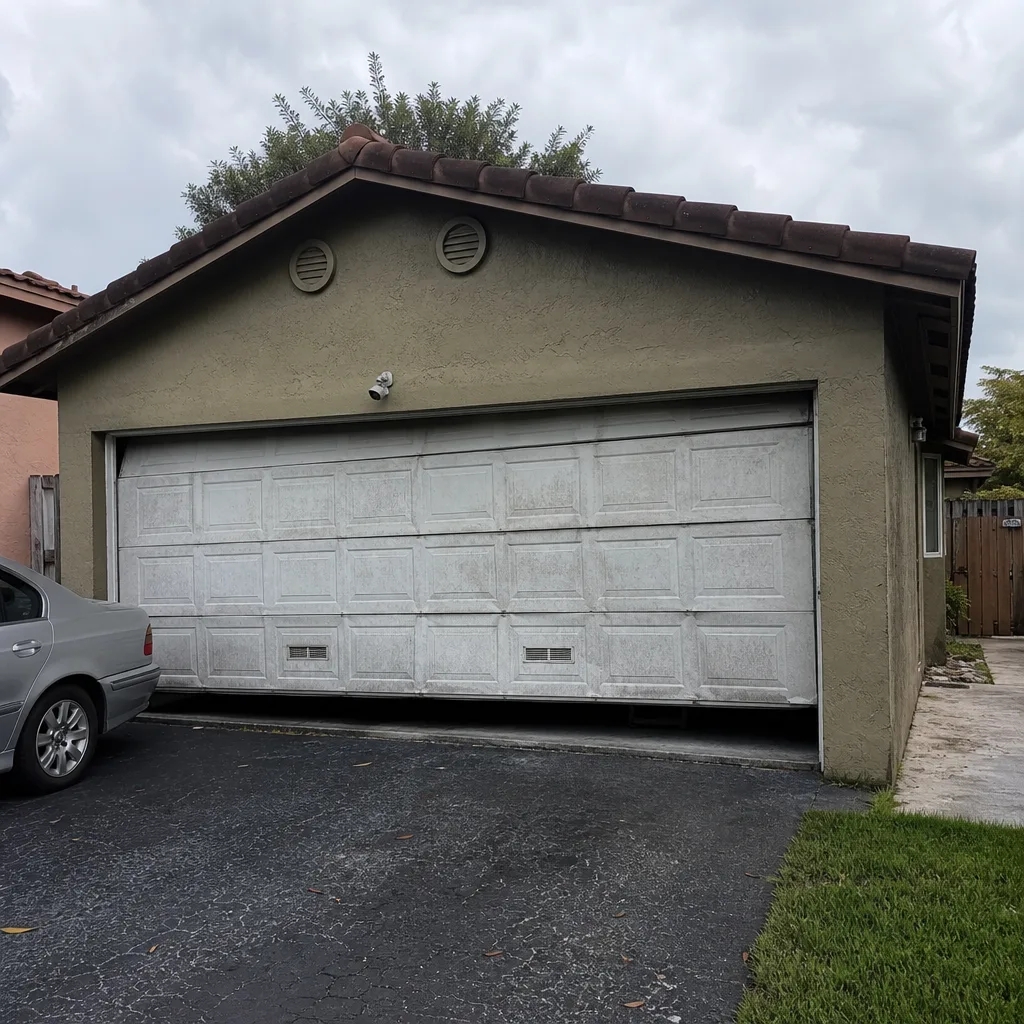
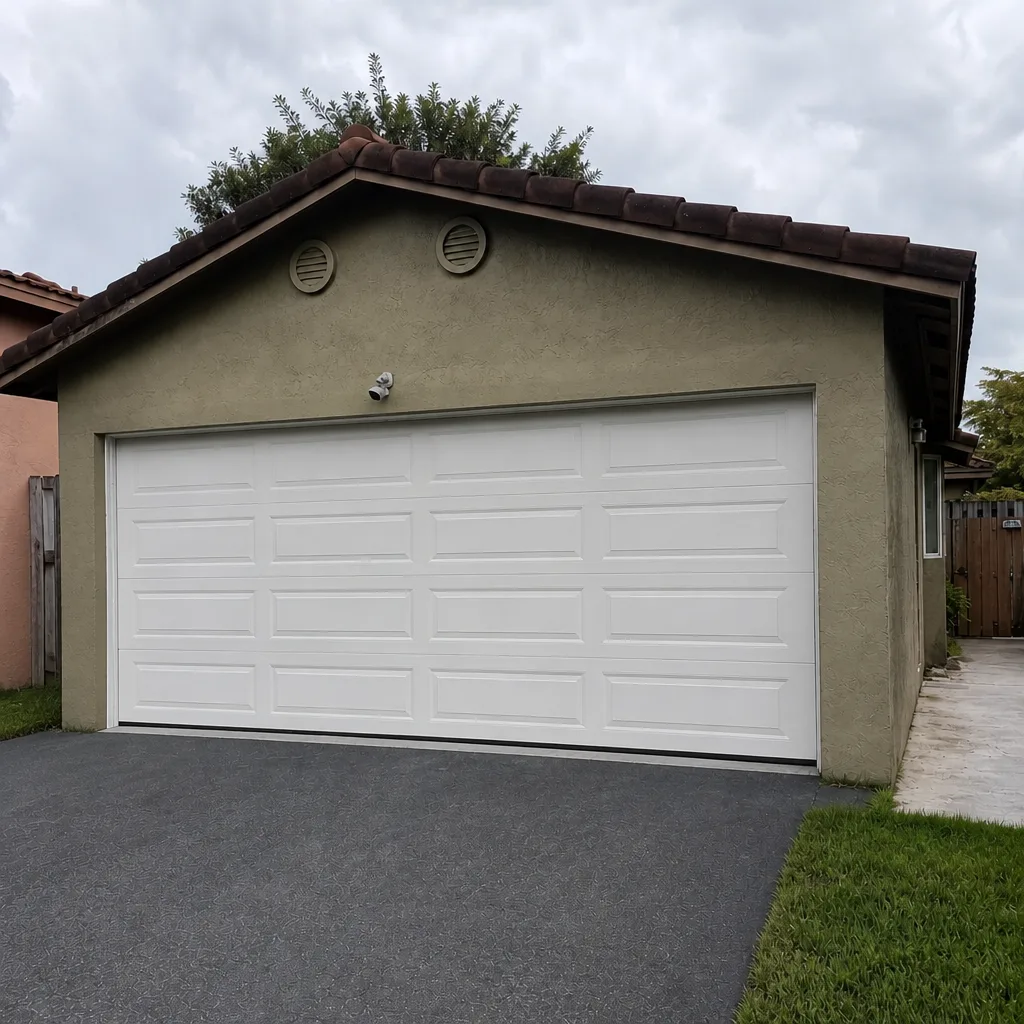
See the difference
 Before
 After
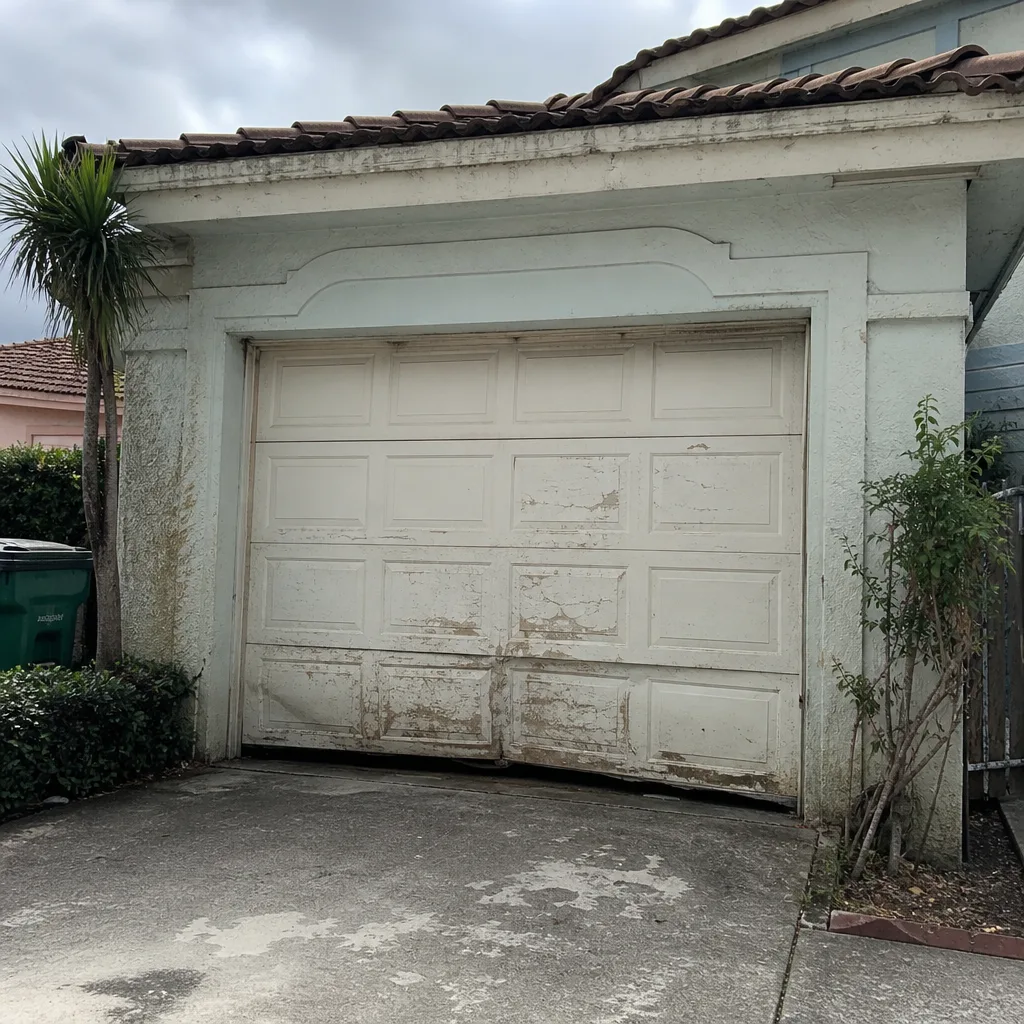 Before
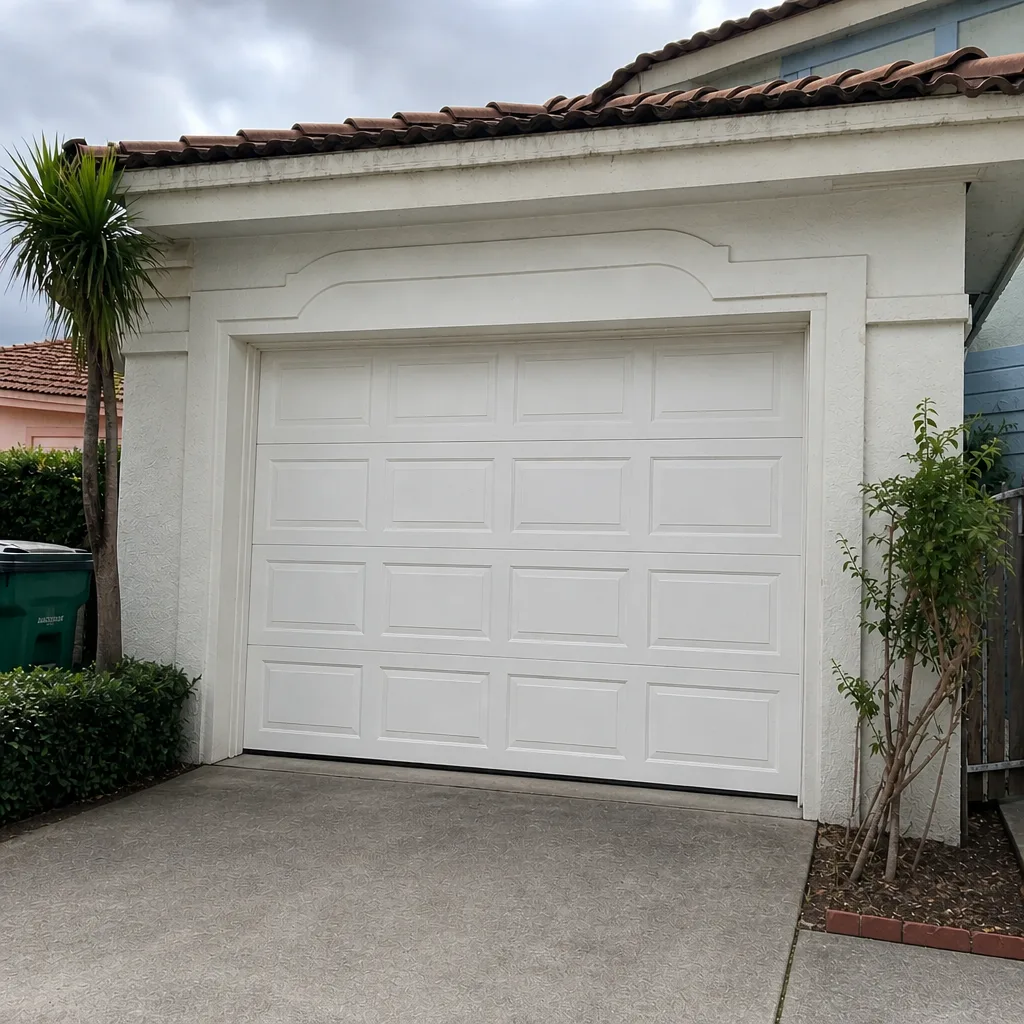 After
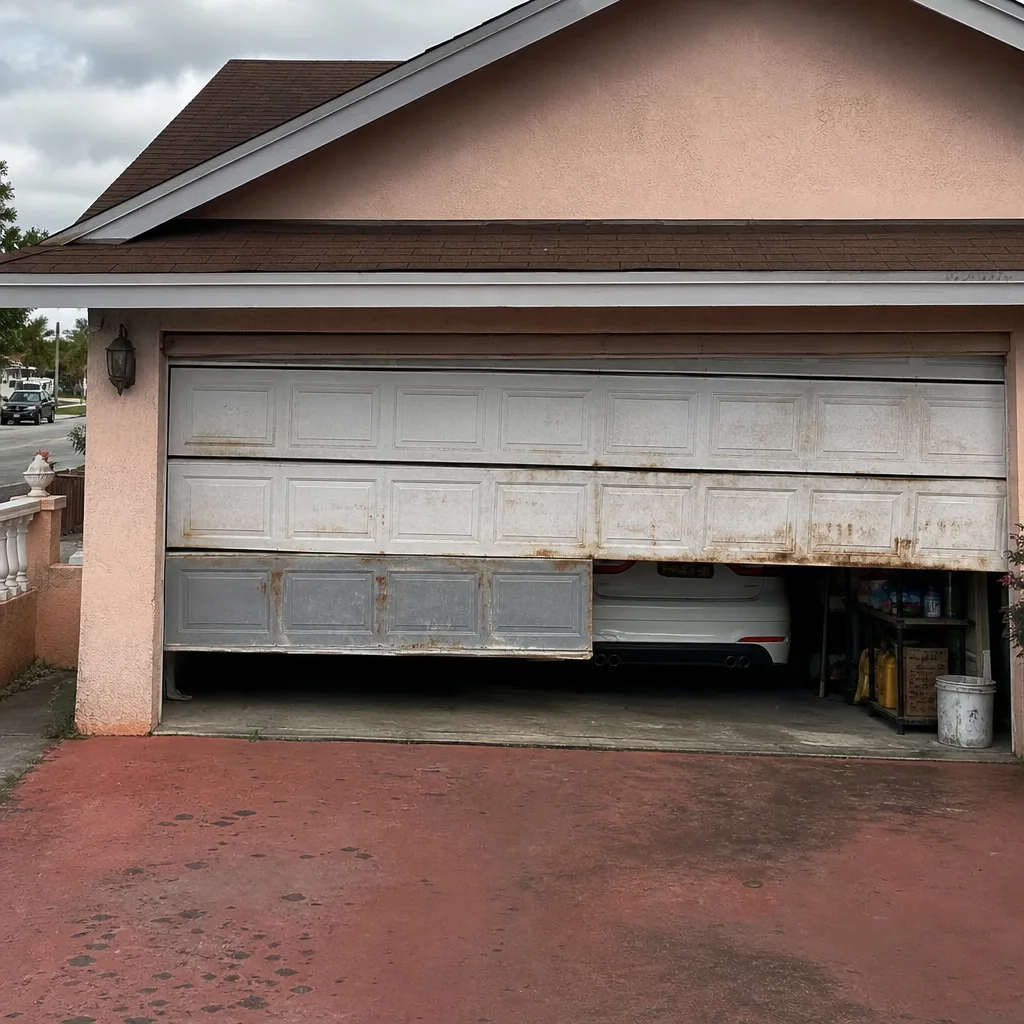 Before
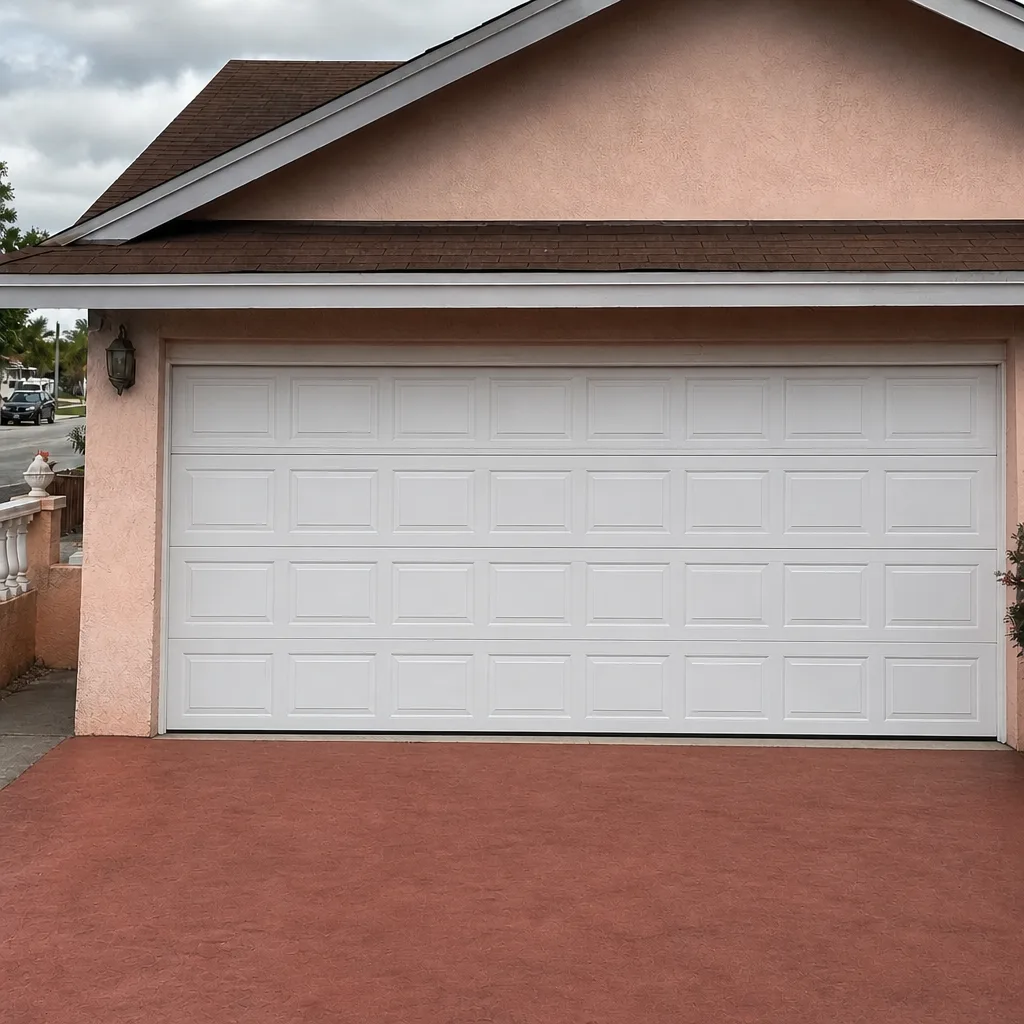 After
Common Mistakes to Avoid
- Spraying WD-40 on the torsion spring. It strips the protective coating and leaves the spring open to rust, which is the start of fatigue cracking in a humid climate. Use a proper spring-rated lubricant and leave the actual spring work to a technician.
- Greasing the tracks. A greased vertical track traps dust and grit, and that grit grinds the rollers down faster. Keep tracks clean and dry.
- Treating “every six months” as gospel. In Hialeah, the four-month interval for rollers and hinges is more realistic, and the seasonal calendar in this guide matters more than a fixed number.
- Assuming a seal is fine because it looks intact. A seal that passes the visual check can still leak in wind-driven rain. Use the paper or light test instead.
- Ignoring rust banding on a spring. Rust banding and coil separation are early warning signs. Waiting until the door won’t open at all turns a predictable repair into an emergency.
- Skipping the balance test because the opener “works.” An out-of-balance door still opens, but it wears the opener’s gears and motor faster. The balance test catches this before a repair bill appears.
- Disconnecting the door and forgetting to reconnect the emergency release. A door that’s been manually lifted and left disengaged is a door that won’t respond to the remote. Re-engage before you walk away.
Frequently Asked Questions
Every four months for lubrication and hardware checks, with the two safety tests monthly. Hialeah’s heat and humidity wear rollers, seals, and springs faster than cooler climates, so the twice-a-year national recommendation is too infrequent here. A full annual review each December ties it together.
The combination of sustained heat, high humidity, and daily thermal expansion puts the door’s metal parts through more cycling than a colder climate does. That’s also why we watch springs for rust banding and seals for ultraviolet damage rather than just visible cracking.
Check the photo-eye sensors first. They’re the most common cause of a door that opens fine but refuses to close, and you can inspect them without any tools. If the sensors are clean and aligned and the door still won’t close, run the balance test and call a technician.
No. Torsion springs store enough energy to cause serious injury if they’re released incorrectly, and they need proper winding bars and tension measurement to install safely. Our technicians have up to 10 years of experience with spring repair. Call (888) 584-5554 for a free estimate.
We work on Clopay, Amarr, Wayne Dalton, Craftsman, LiftMaster, Chamberlain, Genie, and Raynor, which covers nearly every residential system out there. Call (888) 584-5554 and we’ll confirm your model before booking.
In May, run the full door and seal check, confirm the emergency release works, and tighten the track brackets. Test the auto-reverse, and make sure the bottom seal closes fully. If you have a wind-rated door, keep the labeling legible for your records. Call (888) 584-5554 to schedule an inspection before the season starts.
The Bottom Line
The maintenance differences that matter most in Hialeah are frequency, lubrication choice, and what you’re actually looking for. Lubricate rollers and hinges every four months, use the right product and skip the WD-40, and test the seal against driving rain rather than just checking for cracks. Watch the torsion spring for rust banding and coil separation, and run the safety and balance tests monthly. Everything else is straightforward hardware care. When any item on the list points to a spring, cable, or opener problem, stop and call a specialist. Hialeah Garage Door Repair Experts offers free estimates on repair, opener service, spring repair, and full installation, and our team works on the major brands. Call (888) 584-5554. We answer 24/7. Fast dispatch from 7am to 7pm, Sunday through Friday.
Written by the team at Hialeah Garage Door Repair Experts.