
Last updated November 21, 2026
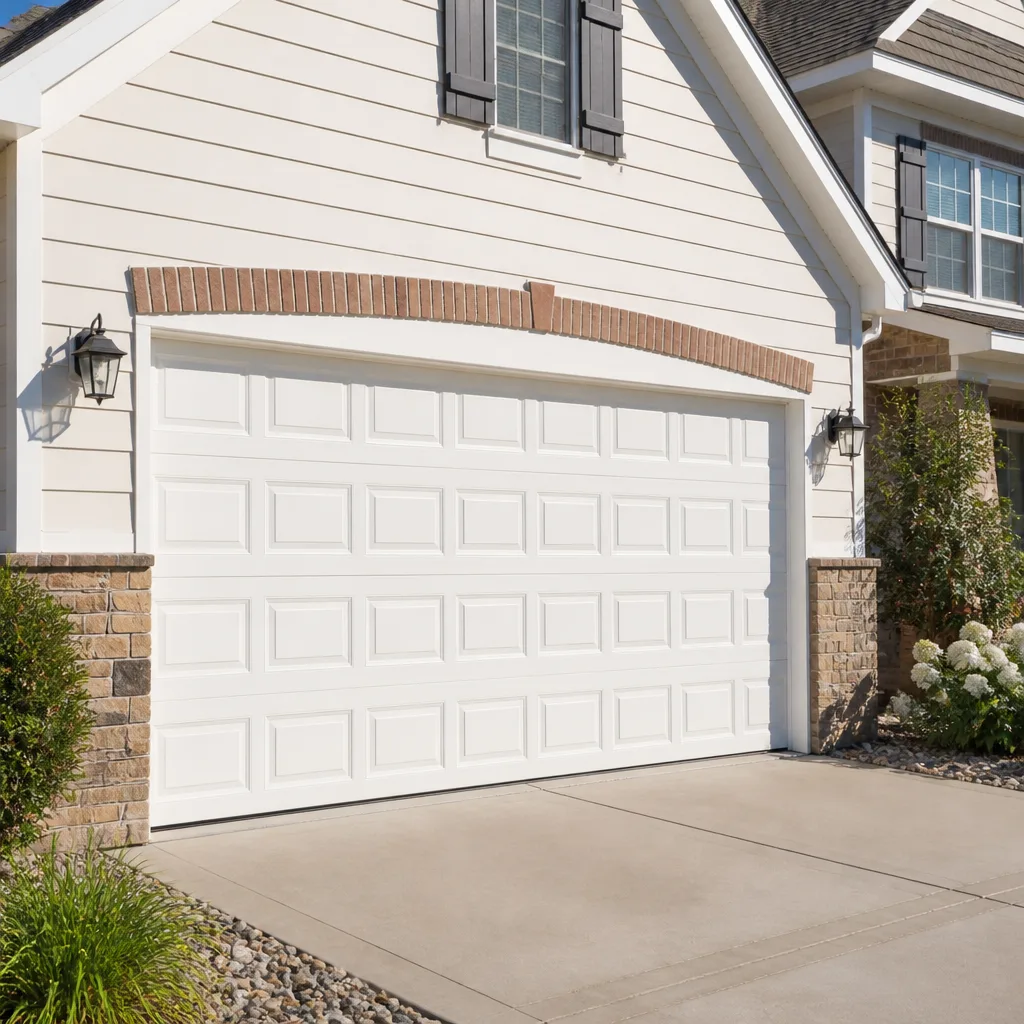 Raised-panel steel
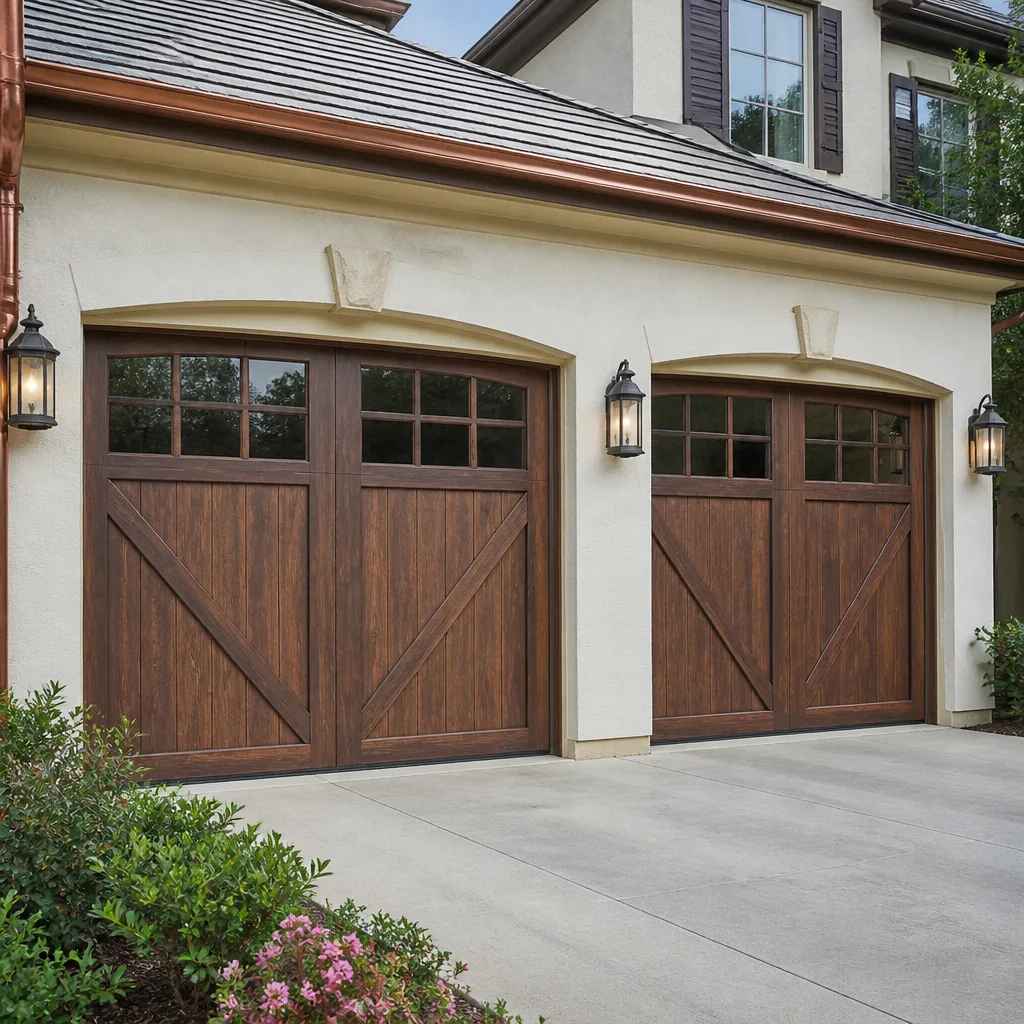 Carriage house
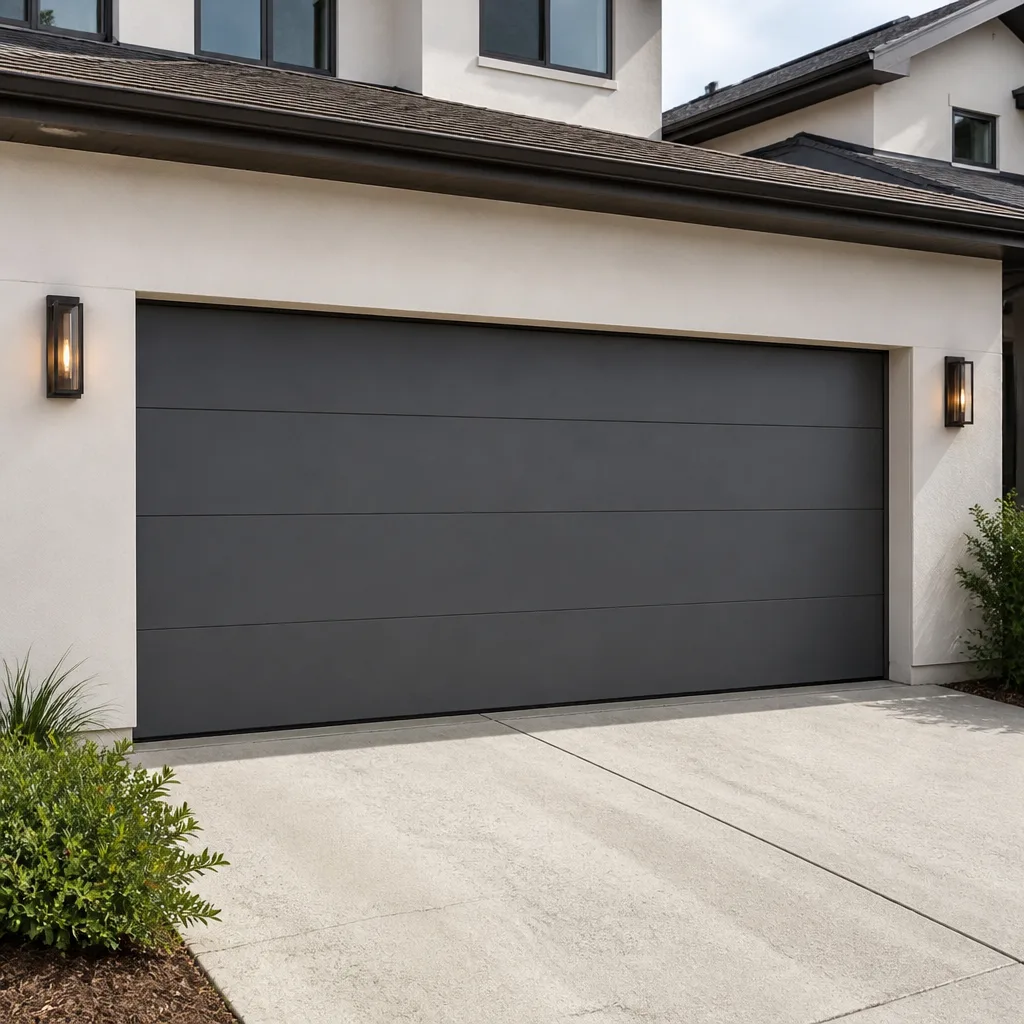 Modern flush
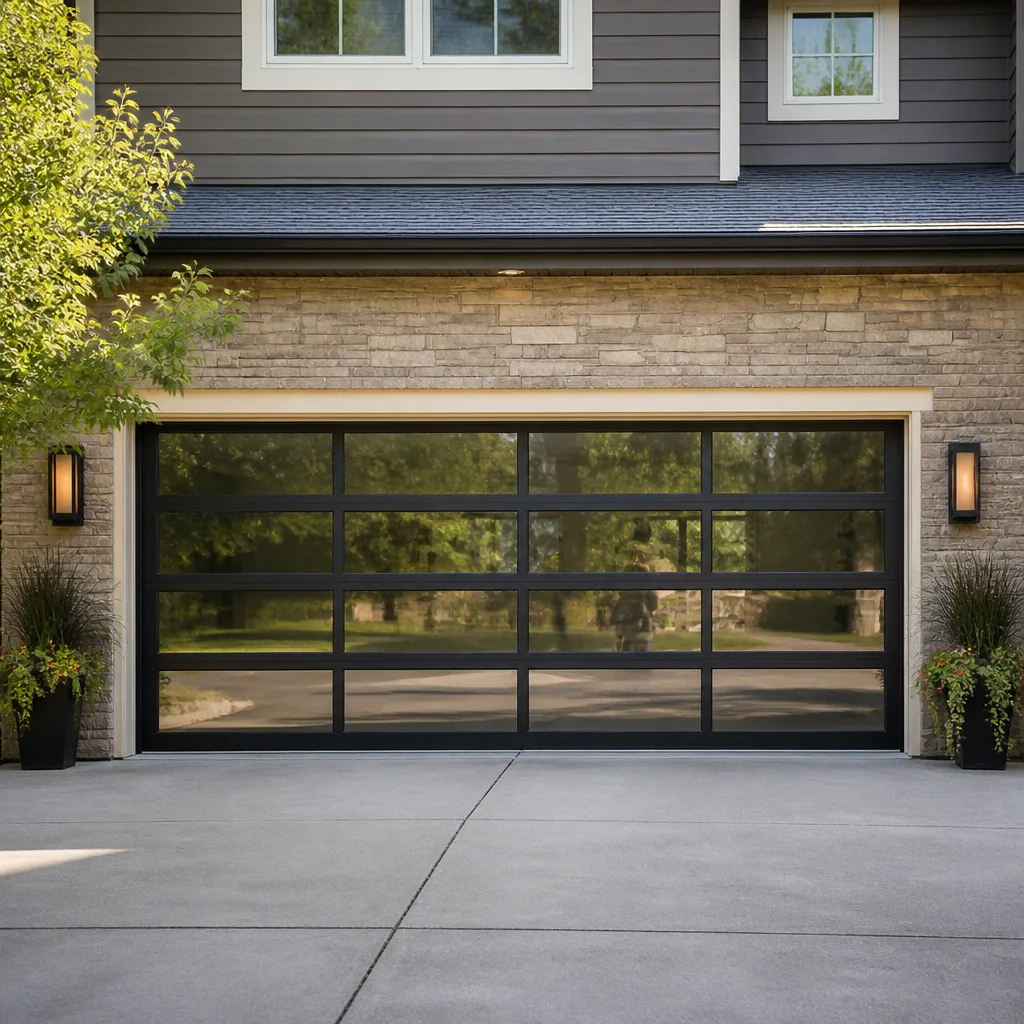 Full-view glass
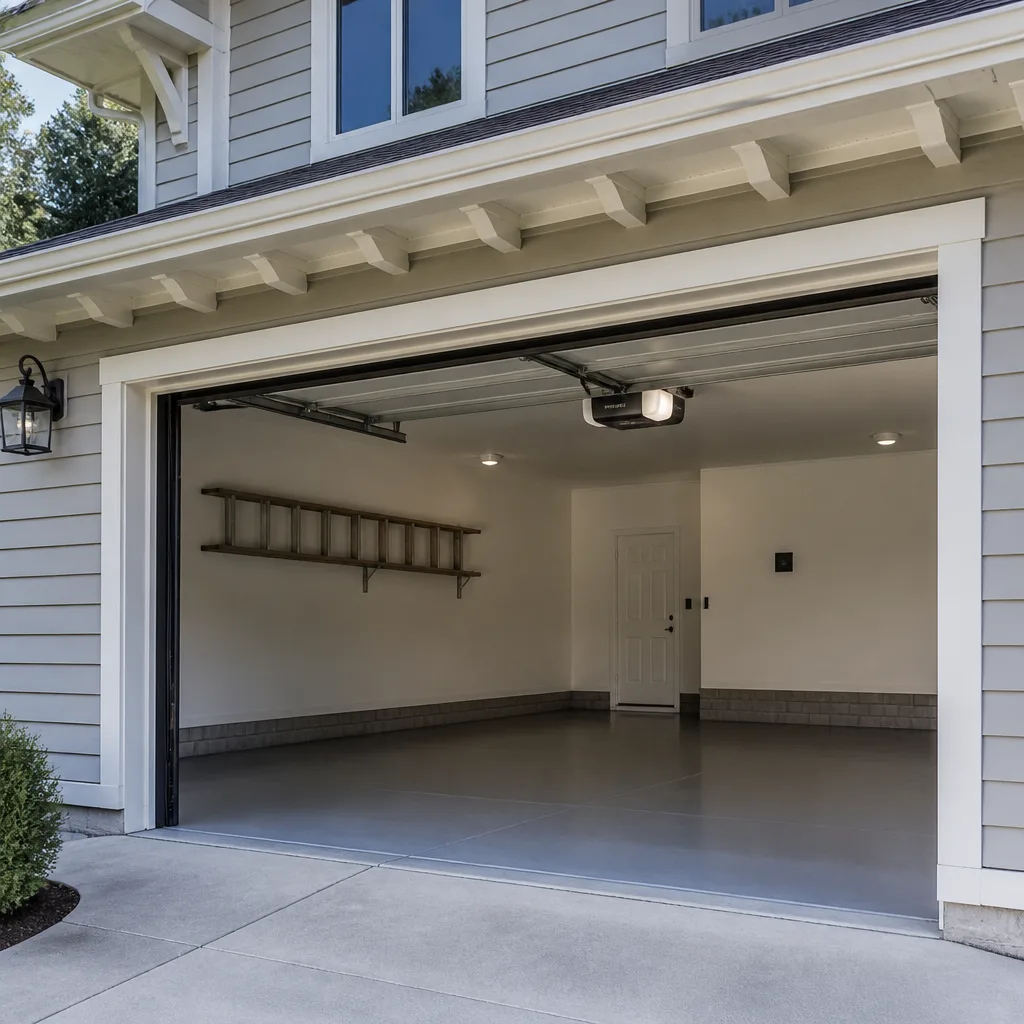 LiftMaster openers
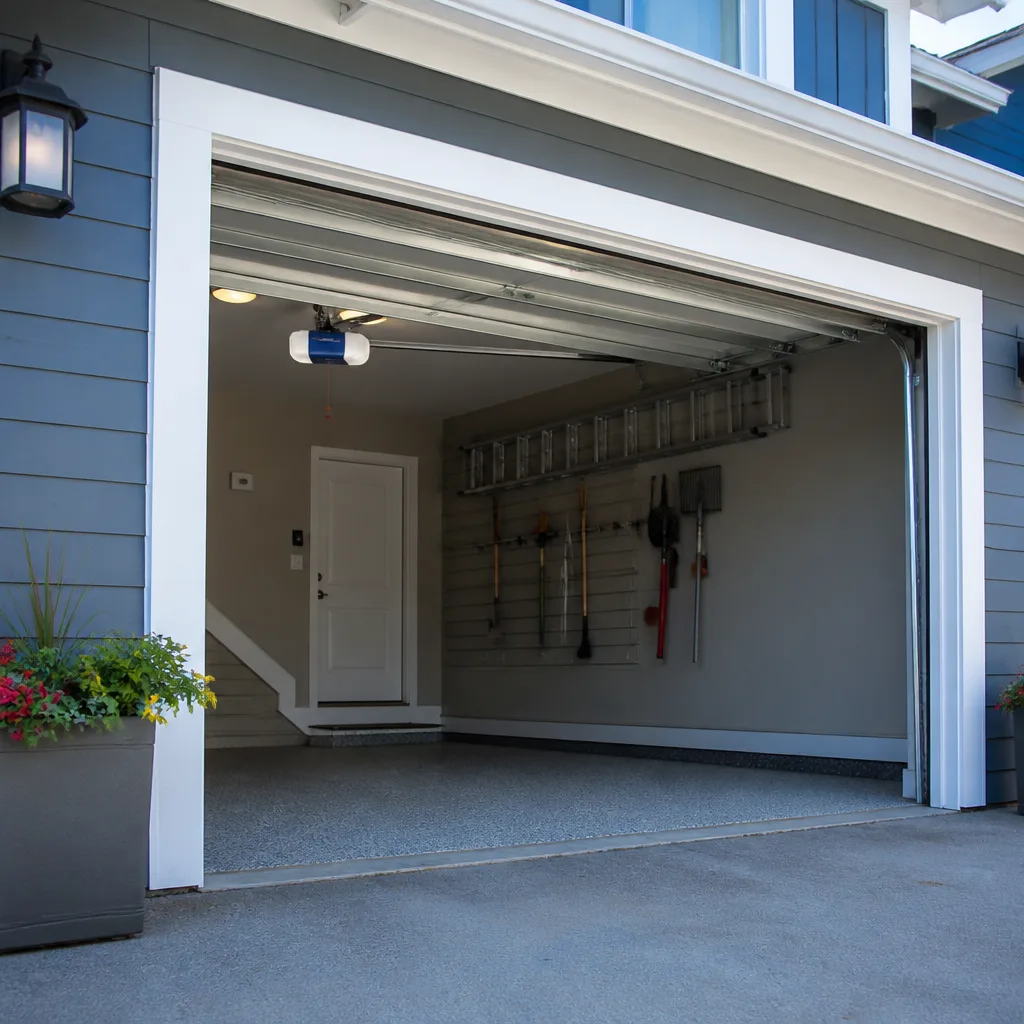 Chamberlain openers
Full 25-point door and opener safety check with every visit - springs, cables, rollers, tracks, and your LiftMaster or Chamberlain opener included
You get a price before we start. It does not change when the pro arrives.
Get your free estimateSeasonal Garage Door Care for Hialeah: Year-Round Homeowner’s Guide
Most seasonal garage door guides are written for a climate Hialeah doesn’t have. They talk about winter weatherstripping for a city that averages 75°F in January, and freeze-thaw cycles for a place where the coldest night of the year still calls for shorts. The result is that homeowners here follow advice built for Ohio and miss the failures that actually happen on their doors. What Hialeah really has is a hurricane season, a humidity peak, a short dry window, and a stretch in the middle of the year when “cooler” is a relative term. Each of those produces a different wear pattern on springs, cables, tracks, panels and seals. This guide maps care to Hialeah’s real climate calendar, month by month, so you’re inspecting for the right failure at the right time.
Quick Answer
Seasonal garage door care in Hialeah follows four phases: pre-hurricane prep in April and May (panels, hardware, bottom seal, manual release), peak-humidity watch in July through September (cable fraying and roller wear), post-storm inspection in October and November (tracks, spring anchor plates, header bracket), and a dry-season audit in January and February (lubrication and a full year’s wear assessment). A door that’s been checked against each phase lasts noticeably longer than one that only gets attention when it breaks.
Styles & brands we work with
- Raised-panel steel
- Carriage house
- Modern flush
- Full-view glass
- LiftMaster openers
- Chamberlain openers
Table of Contents
- Why Standard Seasonal Advice Doesn’t Fit Hialeah
- Pre-Hurricane Season Prep: April and May
- Peak Humidity Season: July Through September
- Post-Storm Inspection Protocol: October and November
- Dry Season Audit: January and February
- Year-Round UV: What Finishes and Seals Actually Hold Up
- A Twelve-Month Quick-Check Calendar
- Common Mistakes to Avoid
- When to Call a Professional
Why Standard Seasonal Advice Doesn’t Fit Hialeah
Hialeah sits in a subtropical climate with a distinct wet season and dry season, not four equal seasons. The wet season runs roughly late May through October, when afternoon thunderstorms are common and humidity stays high. The dry season falls between November and April, with January and February typically the driest, coolest stretch. That’s the calendar your garage door actually lives by. Heat and humidity work on metal, rubber and wood in ways cold weather doesn’t, and the hurricane season overlay means your door is also a structural element in a storm, not just a convenience.
Consider what the heat does. A garage in Hialeah can run significantly hotter than the outside air because of sun loading on the door and roof. That sustained warmth softens lubricants faster than in cooler climates, so parts that rely on a film of grease to stay quiet dry out sooner. Humidity does the opposite to unprotected steel: it promotes surface rust and, more importantly, it stresses the cables. Cables are strands of steel wire wound together, and every humidity cycle nudges them toward the corrosion that eventually causes a strand to snap. The first sign of that is often a small fray you can see or feel near the drum.
The hurricane season matters most because it’s the one time of year when your door’s mechanical condition has real structural consequences. A door that’s off its track or has a weakened bottom seal becomes a liability when wind pressure builds against it. In our experience, the homeowners who get through storm season with the fewest problems are the ones who treated April and May as inspection month, not the ones who waited for the first named storm in the forecast. That single habit is the heart of seasonal Hialeah garage door repair experts recommend building into your year.
Pre-Hurricane Season Prep: April and May
April and May are the right window to put your door into storm-ready condition, before the wet season and the first named storm arrive. This is a check of the things wind and water find first: the panels, the hardware, the bottom seal, and your ability to open the door without power. You don’t need to disassemble anything. You need to look, listen and test.
Walk the door from the outside first. Stand back and look at the panels for dents, cracks, loose hinges or gaps at the seams. On a sectional door, each panel is a separate face, and a panel that’s separating from its neighbors gives wind a place to start working. Look at the bottom seal across its full width; a seal that’s torn, flattened or pulling away lets water in and lets wind pressure under the door. Trim or replace it before the season, not after.
Then test your manual release. Every automatic opener has a release cord that disconnects the door from the motor so you can lift it by hand if the power fails during an evacuation. Pull it with the door down and confirm the door lifts smoothly and lowers without binding. If it doesn’t, that’s a mechanical problem to fix in May, not a thing to discover when the grid is down. This is also why we lean on Chamberlain and Genie openers when advising on release mechanisms: their release systems are straightforward to test and clearly labeled on the rail.
- Inspect all panels for cracks, dents and seam gaps; note any that need replacing.
- Check the bottom seal for tears, flat spots and separation from the door.
- Test the manual release cord with the door down, lifting and lowering by hand.
- Look at the hinges and rollers for rust or looseness, and tighten visible fasteners.
- Confirm the photo-eye safety sensors are clean, aligned and unobstructed.
- Clear the tracks of debris and check for obvious bends before the season.
If any of those checks turns up something that’s beyond a visual inspection, that’s the moment to book a garage door repair visit rather than wait. April and May are quieter than the middle of storm season, and getting a problem resolved early beats dealing with it under pressure.
Peak Humidity Season: July Through September
July through September is the worst stretch of the year for your cables and rollers. Humidity is at its highest, the garage stays warm, and the combination accelerates two specific failures: cable corrosion and heat-softened roller wear. If you do one thing during these months, look at your cables and listen to your door.
Cables fray from the inside out. A cable is many thin strands wound into a rope, and humidity-driven corrosion weakens individual strands before the failure becomes visible as a whole. What you can check is the cable near the drum at the top of each side, and along its length where it runs past the pulleys. Look for a fuzzy or frayed texture, any broken strand poking out, or rust staining on the cable itself. A cable with a broken strand has lost strength and should be replaced, not patched. Cables are under high tension and are genuinely dangerous to handle. Don’t try to remove or adjust one yourself.
Rollers wear faster in the heat. The nylon or steel wheels that ride in the tracks carry the weight of the door, and heat softens the nylon kind, so they flatten and develop flat spots. The visual signs are a wheel that no longer looks round, a track that shows a shiny scuff mark where the roller has been dragging, and a door that shudders as it travels. Listen for a grinding or rumbling sound during operation; that’s usually a roller, not the opener. If the opener is straining, the problem may actually be the door’s balance or the rollers, not the motor. That’s a common misdiagnosis we see, and it’s why a proper garage door opener repair visit starts with the door, not the box on the ceiling.
Humidity also works on the springs. Torsion springs at the top of the door and extension springs along the sides are steel under load, and surface rust is their early warning sign. A light coat of the right lubricant on the spring coils helps, but if a spring looks deeply rusted or you hear a loud bang from the garage, stop using the door. Spring work is the most dangerous repair in this trade and belongs with a trained technician, which is why we treat garage door spring repair as its own discipline rather than an add-on.
Post-Storm Inspection Protocol: October and November
After a storm passes, even a near-miss, check the door even if it looks fine. Wind pressure and vibration can shift things you can’t see from the driveway, and the damage often shows up weeks later as a door that suddenly binds or a track that’s out of alignment. This is the inspection that catches the problems a quick glance misses.
Start with track alignment. The vertical and horizontal tracks on each side should be parallel and straight. Look down the length of each track from the floor and see whether it runs true or has a bend or bow. A small misalignment makes the rollers drag and the door work harder, and it can worsen over time. Next, look at the spring anchor plate at the top center of the door, where the torsion springs are mounted. Check that it’s seated flat and the fasteners look tight. Then check the header bracket, the piece mounted to the wall above the door that holds the torsion shaft or the opener arm. Look for any gap between the bracket and the wall, or fasteners that have pulled slightly loose. Those are the points where storm vibration shows up first, and a loose header bracket is a structural issue that should be looked at by a technician.
- Sight down each track and confirm it’s straight and parallel to its partner.
- Inspect the spring anchor plate for flatness and tight fasteners.
- Check the header bracket at the wall for gaps or pulled fasteners.
- Test the balance by disconnecting the opener and lifting the door halfway; it should hold.
- Look at the bottom seal and panels for new cracks or gaps opened by wind.
- Run the door through a full open-and-close cycle and listen for new noises.
If anything looks off, especially a bent track or a loose bracket, close the door and leave it until a technician can look. If the storm took out power and your door is stuck, our emergency garage door service is built for exactly that: cases where a non-working door leaves the home unsecured or a vehicle trapped. We answer 24/7, with fast dispatch from 7am to 7pm, Sunday through Friday.
Dry Season Audit: January and February
January and February are the best months of the year to do your deep garage door maintenance in Hialeah. Humidity is at its lowest, the garage is comfortable to work in, and the dry air lets lubricants penetrate metal properly and stay where you put them. It’s also the one time of year you can assess a full year’s wear in a single pass, because the wet season is behind you and the next one is still months off.
Lubrication done in the dry season lasts. The right approach is to use a garage-door-specific lubricant, not general household oil, on the moving metal parts: the hinges, the rollers (the shafts, not the wheels themselves), the spring coils, and the bearing plates. A lithium- or silicone-based product that’s designed for this stays put longer than a thin oil that runs off. In humid air, a lubricant film picks up moisture and dust; in dry air, it sets cleanly and protects through the months that follow. If you lubricate in the middle of summer, you’re fighting the humidity for the same result.
The dry-season audit is also your assessment pass. With the door balanced and disconnected from the opener, check four things:
- Springs: look for rust, gaps between coils, or a spring that looks stretched compared with what you remember. Note anything that changed over the year.
- Cables: check for fraying, rust staining, and any loose or twisted spots along their run.
- Rollers: spin each wheel by hand and feel for flat spots or wobble.
- Panels and seal: look for UV-related fading, cracking, or a bottom seal that’s gone hard and brittle.
A year’s worth of notes from this one inspection tells you what to replace before the wet season returns. It’s the cheapest insurance against a summer breakdown. If you’d rather have a trained eye do the audit, a garage door repair visit in the dry season is the low-stress time to do it.
Year-Round UV: What Finishes and Seals Actually Hold Up
Hialeah’s sun does more to your door than any other single factor across the year. The UV index here runs high for most of the calendar, and that sun attacks two things on a garage door: the finish on the panels, and the rubber or vinyl of the bottom seal. Both degrade on a predictable timeline, and knowing that timeline helps you plan replacements instead of reacting to them.
On panel finishes, the steel doors from manufacturers like Clopay and Amarr are typically factory-finished with a baked-on or powder-coated paint system that holds color well, but the sun still takes a toll on the surface over years. What degrades fastest on a lower-grade finish is the shine and the topcoat, which leads to chalking, fading and eventually surface oxidation. A door with a quality factory finish will look far better at the five-year mark than one with a thin finish, and the difference shows first on the panels that face the afternoon sun. If your door is painted wood or a field-painted steel door, plan on recoating more often here than a standard guide would suggest.
Bottom seals are where UV damage shows up soonest. The rubber or vinyl seal across the bottom of the door is exposed to sun, heat and the ground at the same time, and lower-grade materials can harden, crack and lose their flexibility within about 18 months in this climate. A seal that’s gone brittle no longer seals, which lets water and wind in and defeats the point of having it. When a seal fails that fast, the fix isn’t more sealant; it’s a seal made from a material that’s rated for sun exposure, replaced before the wet season. Check yours in the dry season and again before hurricane season, and you’ll catch the failure before it lets water into the garage.
A Twelve-Month Quick-Check Calendar
Here’s the year mapped to the four phases, so you can see what to do when. Print it or save it to your phone and work through it once a month.
- January and February: Dry-season audit. Lubricate hinges, rollers, springs and bearings. Assess a full year of wear. Check panels and bottom seal for UV damage.
- March: Confirm the manual release works and the door balances. Note anything that needs attention before storm season.
- April and May: Pre-hurricane prep. Inspect panels, hardware and bottom seal. Clear tracks. Tighten visible fasteners. Clean and align photo-eye sensors. Book any repair before the season.
- June: First month of wet season. Watch for new noises and a door that shudders as humidity climbs.
- July through September: Peak-humidity watch. Check cables for fraying and rust, rollers for flat spots, and springs for surface rust. Listen during operation.
- October and November: Post-storm protocol. Check track alignment, spring anchor plate and header bracket after any storm or near-miss.
- December: End-of-year check. Look for anything that changed over the year and plan the dry-season audit.
That calendar is the whole system. It’s not complicated, but it’s specific to Hialeah, which is the point. A door that gets this rhythm of attention will outlast one that only sees a technician in an emergency. When a repair is needed, our technicians have up to 10 years of experience across the most widely installed residential brands, so you’re not guessing whether your system is one we work on. We handle LiftMaster, Chamberlain, Genie, Clopay, Amarr, Wayne Dalton, Craftsman and Raynor equipment.
See the difference
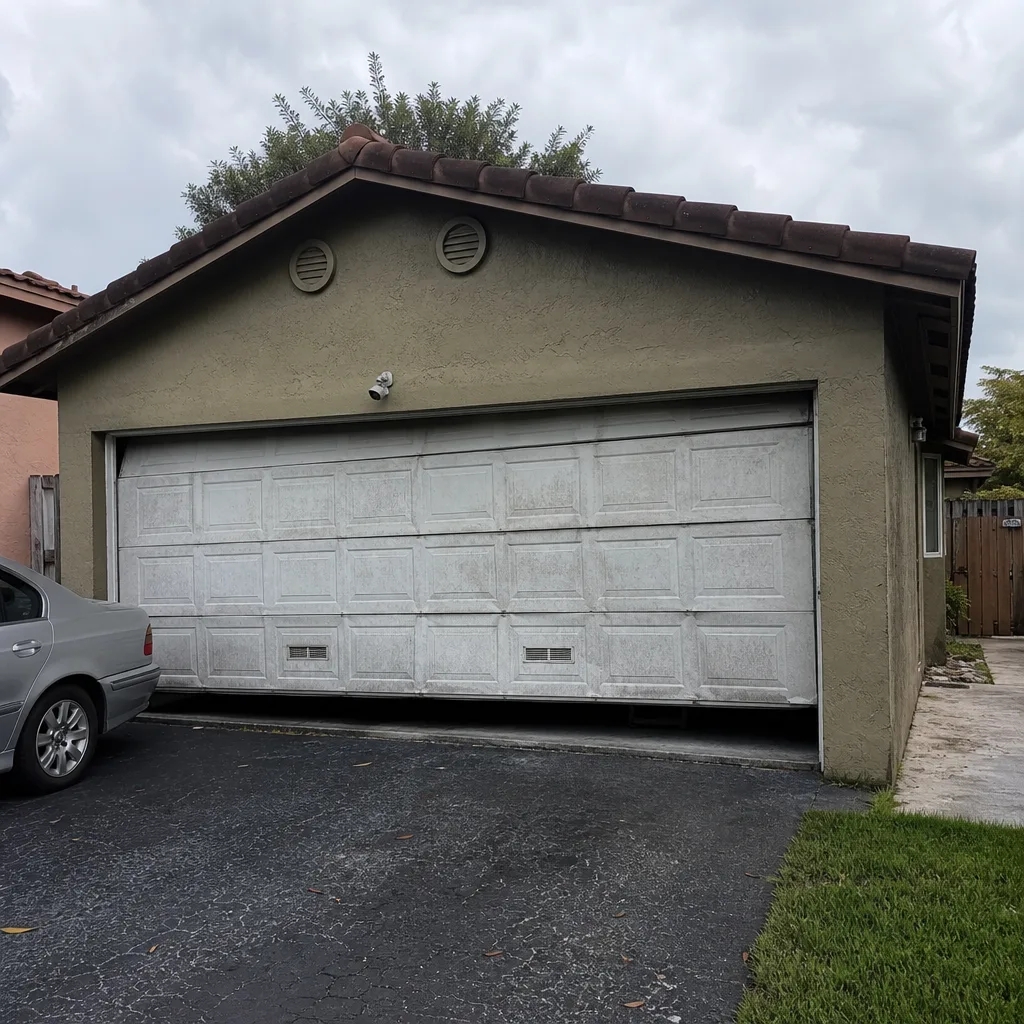 Before
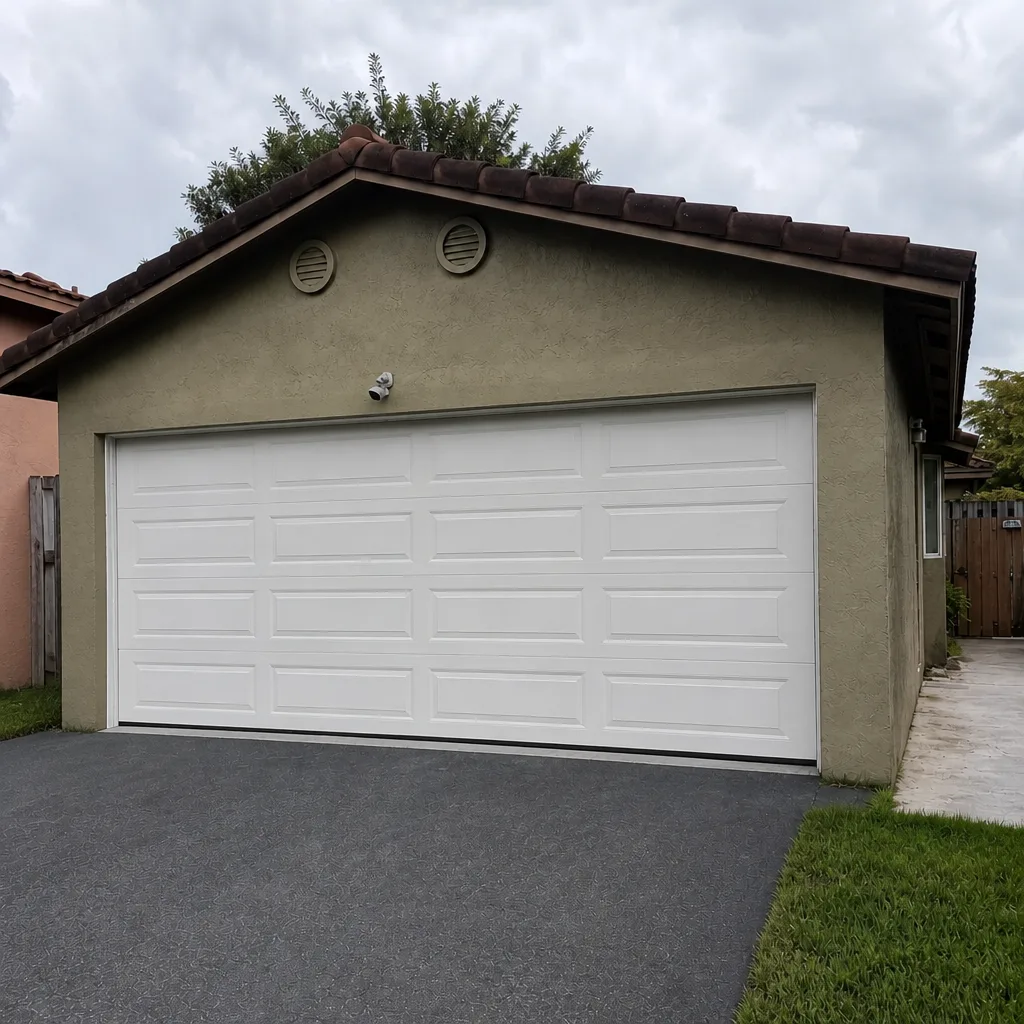 After
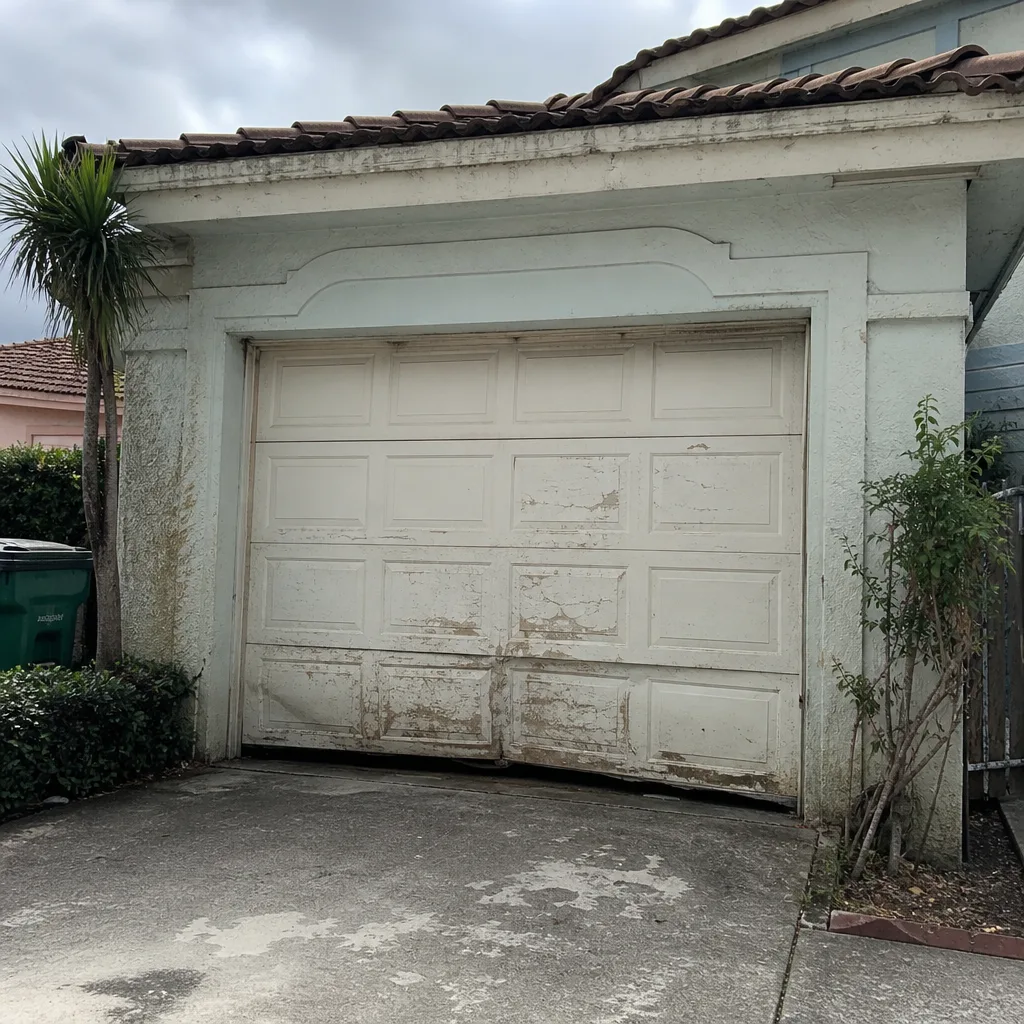 Before
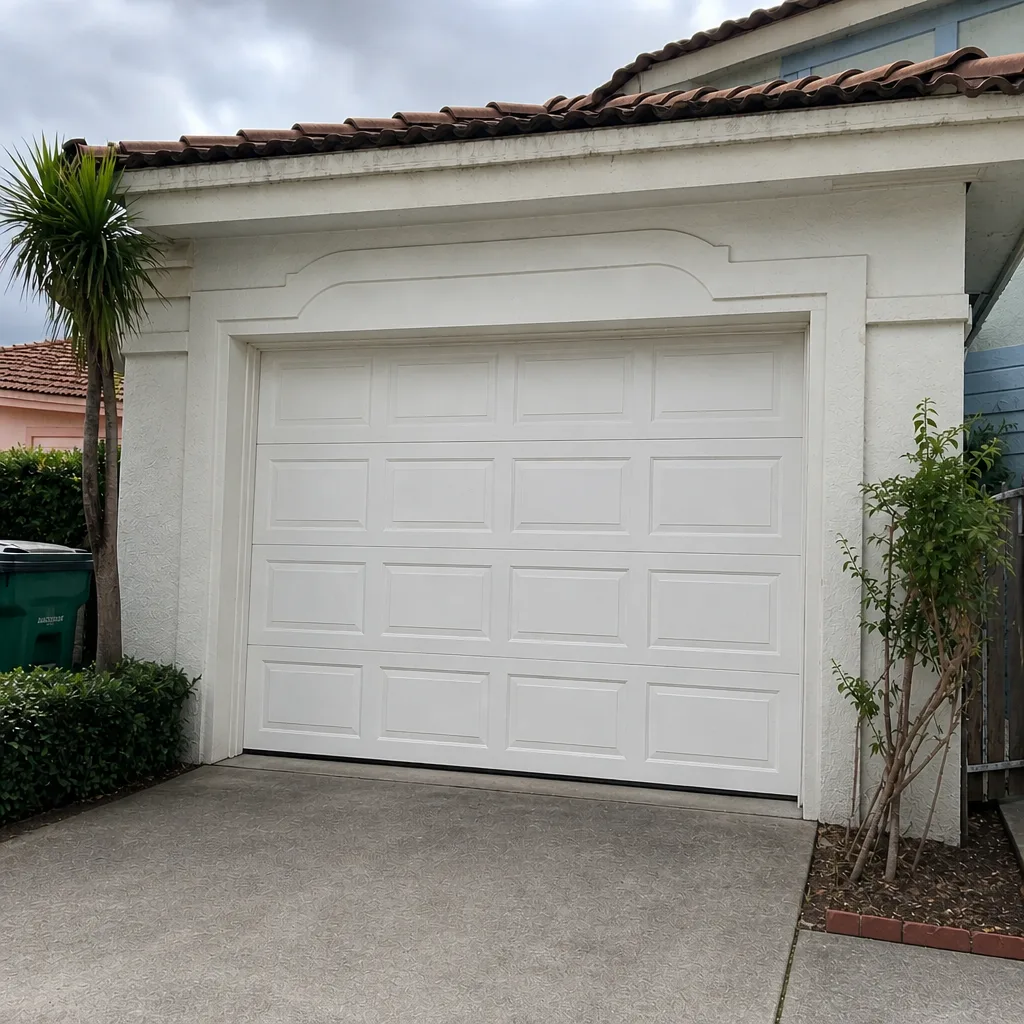 After
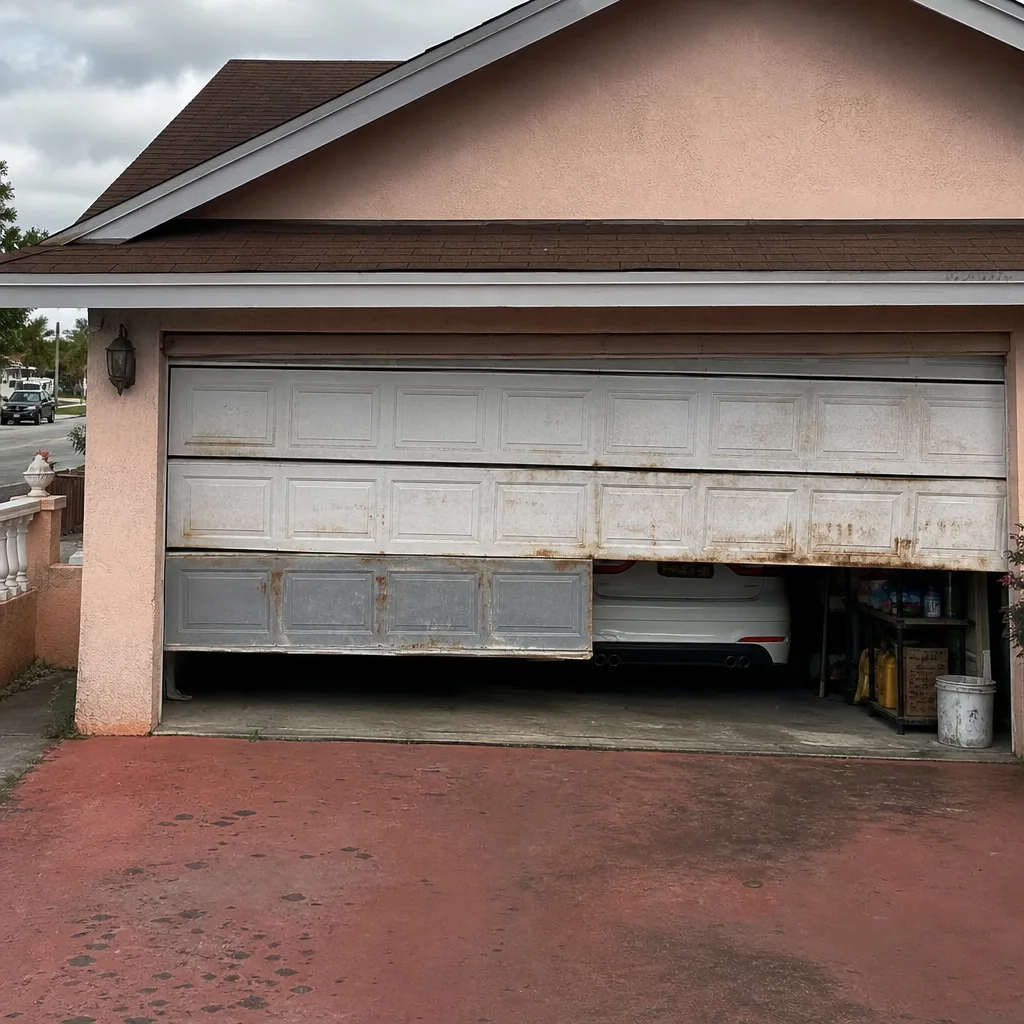 Before
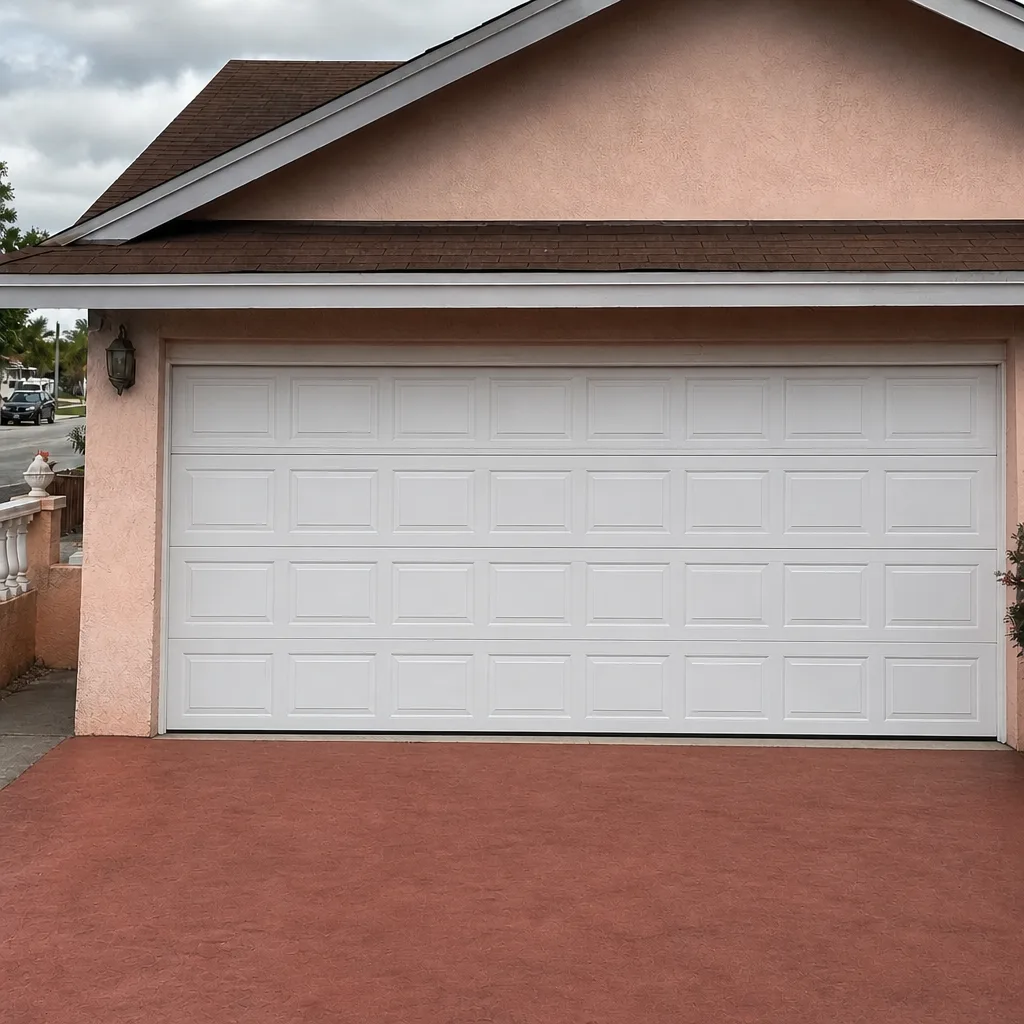 After
Common Mistakes to Avoid
- Following a generic seasonal guide. Weatherstripping advice written for cold climates doesn’t address humidity-driven cable failure or UV seal degradation, which are the two problems that actually shorten a Hialeah door’s life. Use a calendar built for this climate.
- Waiting for a visible break before inspecting. Cables fray from the inside, springs rust under a surface film, and tracks bow slowly. By the time the door stops working, the damage has usually been building for a season. Monthly checks catch the early signs.
- Lubricating in the middle of summer. A lubricant applied in peak humidity picks up moisture and dust and doesn’t set properly. January and February are the right months to lubricate; doing it in July wastes the product and the effort.
- Ignoring the bottom seal. A hard, brittle seal lets water and wind under the door and is one of the earliest things to fail in this sun. Replace it before the wet season, not after you notice water in the garage.
- Trying to adjust or replace springs yourself. Torsion and extension springs are under high tension, and a mistake can cause serious injury. This is the one part of garage door care that should always go to a trained technician.
- Skipping the post-storm check because the door looks fine. Wind vibration shifts tracks and loosens header brackets in ways you can’t see from the driveway. Check after every significant storm, even a near-miss.
- Using general household oil on the moving parts. A garage-door-specific lubricant designed for hinges, rollers and springs stays put longer and attracts less dust than a thin oil. The wrong product does more harm than good.
When to Call a Professional
Some of this work you can do safely: visual inspections, cleaning the tracks, testing the manual release, applying lubricant in the dry season. Call a professional when the problem is mechanical or dangerous. That includes any cable that’s frayed or has a broken strand, a spring that’s rusted through or has snapped, a track that’s bent or out of alignment, a header bracket or anchor plate that’s loosened, a door that’s come off its track, and any door that’s stuck with your car inside or your home unsecured. Our technicians have up to 10 years of experience and handle every major residential brand. Hialeah Garage Door Repair Experts offers free estimates in Hialeah, so call (888) 584-5554 to book one. We answer 24/7, with fast dispatch from 7am to 7pm, Sunday through Friday.
Frequently Asked Questions
It means checking the right components at the right time of year. In April and May you prep for hurricane season by inspecting panels, hardware, the bottom seal and the manual release. In July through September you watch for humidity-driven cable fraying and roller wear. In October and November you do a post-storm check of tracks and brackets. In January and February you lubricate and assess a full year of wear. Call (888) 584-5554 for an exact quote on any repair – estimates are free.
Lubricate in January or February, during the dry season. Humidity is at its lowest then, so the lubricant penetrates the metal properly and stays put instead of running off. Lubricating in the middle of summer means fighting the humidity for the same result. Call (888) 584-5554 if you’d like a technician to handle lubrication as part of a dry-season audit – estimates are free.
Because your door is a structural element in a storm, not just a convenience. A panel that’s separating, a bottom seal that’s torn, or a track that’s out of alignment gives wind a place to start working. The right time to fix those is April and May, before the first named storm. Call (888) 584-5554 to book a pre-storm inspection – estimates are free.
Lower-grade seals can harden and crack within about 18 months in this climate because they’re exposed to sun, heat and the ground at once. A seal made from a UV-rated material lasts longer, but it still needs checking in the dry season and again before hurricane season. Call (888) 584-5554 to have a torn or brittle seal replaced – estimates are free.
Look down each track to see whether it runs straight and parallel. Check the spring anchor plate and the header bracket at the wall for gaps or pulled fasteners. Disconnect the opener and lift the door halfway – it should hold. If any of those look off, or the door binds or makes new noises, call a technician before using it again. Call (888) 584-5554 – estimates are free.
You can and should check them visually – look at the cables for fraying or rust staining, and the springs for surface rust or gaps between coils. What you shouldn’t do is adjust, remove or replace a cable or spring yourself, because they’re under high tension and a mistake can cause serious injury. If you see a problem, call (888) 584-5554 – estimates are free.
The Bottom Line
Hialeah doesn’t hand you four neat seasons, so skip the winter-weatherstripping advice and use a calendar built for this climate. Prep your door in April and May before the storms, watch cables and rollers through the humid months, check tracks and brackets after any storm, and do your lubrication and wear assessment in January and February when the air is dry. That rhythm is the whole system, and it’s the difference between a door that lasts and a door that fails in the middle of the wet season. If you’d rather leave the inspections and repairs to a specialist, Hialeah Garage Door Repair Experts works on every major residential brand and handles everything from a frayed cable to a full new installation. Call (888) 584-5554 for a free estimate. We answer 24/7, with fast dispatch from 7am to 7pm, Sunday through Friday.
Written by the team at Hialeah Garage Door Repair Experts.